

Power Meets Purpose: Redeeming The 48 Laws of PowerThrough Maxwell’s Leadership Lens
In leadership conversations, few books spark more contrast than Robert Greene’s The 48 Laws of Power and John C. Maxwell’s The 21 Irrefutable Laws of Leadership. One is often called ruthless; the other, righteous. Yet both are studies in influence — the timeless art of moving people toward a vision.
Power vs. Service: Two Languages of Leadership
Greene speaks the language of strategy, psychology, and protection — a world where knowledge is armor and influence is survival.
Maxwell speaks the language of service, growth, and character — a world where influence is trust, and leadership is love in action.
At first glance, their approaches seem diametrically opposed. But beneath the surface, they share a core truth:
Leadership is not about titles or authority — it’s about influence.
Where They Overlap
- Influence is the Core – Both recognize that leadership lives or dies on a person’s ability to inspire, persuade, and move others.
- Human Behavior Matters – Both study motivation, perception, and emotion — the levers of human connection.
- Strategy and Self-Awareness – Maxwell’s “intentional growth” parallels Greene’s “strategic awareness.” Both urge leaders to think ahead and act with purpose.
Maxwell’s Blind Spot
Maxwell believes deeply in the goodness of people and the purity of influence through service. His blind spot? Influence, even when well-intended, can become a form of control. Leaders who aim to “develop others” may inadvertently keep them dependent — a dynamic Greene would fully recognize.
The 48 Laws’ Soft Spot
Greene’s brilliance lies in clarity and caution — his system protects the self. But its soft spot is a lack of heart. Influence built solely on manipulation eventually isolates the leader. Power without empathy becomes empty authority.
Redeeming Power Through Service
When filtered through Maxwell’s leadership lens, the 48 Laws transform:
| 48 Laws Principle | Maxwell’s Reframe | Outcome |
|---|---|---|
| Keep others dependent | Develop others’ strengths | Influence through empowerment |
| Use selective generosity | Be consistently generous and honest | Trust replaces suspicion |
| Court attention | Use influence for purpose and vision | Visibility serves others |
| Work on hearts and minds | Lead with empathy and care | Loyalty built on authenticity |
| Conceal intentions | Lead transparently and wisely | Trust-based strategy |
The Middle Way: Power with Purpose
Leadership today calls for wisdom paired with compassion — the fusion of Greene’s strategic intelligence with Maxwell’s servant heart.
Power and service are not enemies. They are two sides of the same coin:
- Power without purpose corrupts.
- Purpose without power collapses.
True leadership is the art of mastering both.
In Practice
- Be as strategic as Greene, but as sincere as Maxwell.
- Study people not to use them, but to understand and uplift them.
- Build influence not through dependence, but through empowerment.
A leader who blends the sharp mind of power with the open heart of service doesn’t just command — they inspire. They lead movements, not followings. They create change, not control.
Closing Thought
In a world that often rewards control, Maxwell reminds us to serve.
In a world that can mistake kindness for weakness, Greene reminds us to stay sharp.
Together, they form the complete leader — one who knows how to wield power without losing humanity.

Celebrity Space Tourism: The Real Carbon Cost Behind New Shepard
The recent New Shepard flight carrying Katy Perry and Lauren Sánchez reignited a debate that won’t disappear: what is the true environmental cost of suborbital celebrity tourism? Space travel may look clean from the outside—especially with a hydrogen-fueled rocket—but the deeper carbon story is far more complex.
What a Carbon Footprint Really Is
A carbon footprint counts all greenhouse gases produced by an activity. For rockets, this includes not only the launch itself but also the fuel production, supply chain, and atmospheric effects at extreme altitudes. That’s where the impact becomes disproportionate.
New Shepard’s True Emissions
New Shepard burns liquid hydrogen and oxygen, producing almost no CO₂ at the point of combustion. But the hydrogen supply chain tells a different story:
- Most hydrogen is “gray,” made from natural gas.
- Producing it emits 9–12 tons of CO₂ per ton of hydrogen.
- Life-cycle estimates put a single New Shepard flight at ~100–300 tons of CO₂e.
That’s 15–300 tons per passenger for an 11-minute ride—equal to a year or even a decade of an average person’s emissions.
Hydrogen Isn’t Automatically Clean
Hydrogen only becomes low-emission if it’s green hydrogen (made with renewable-powered electrolysis). Blue Origin’s current supply chain doesn’t rely on green hydrogen at scale. Even liquefying and transporting hydrogen consumes huge amounts of energy. “Clean rocket fuel” is largely a marketing illusion.
How Blue Origin Compares to Virgin Galactic & SpaceX
Virgin Galactic uses a hybrid solid rocket that emits CO₂ and black carbon (soot).
SpaceX uses kerosene or methane, producing CO₂ and particulates high in the atmosphere.
| Company | Fuel | Key Climate Issue |
|---|---|---|
| Blue Origin | Hydrogen | Massive emissions from hydrogen production; high-altitude water vapor |
| Virgin Galactic | Solid hybrid | Black carbon in the stratosphere (extremely potent warming) |
| SpaceX | Kerosene/methane | High CO₂ + soot at orbital altitudes |
Each system affects the atmosphere differently, but all share one trait: exceptionally high emissions per passenger.
High-Altitude Effects: The Wildcard
Rocket exhaust reaches the stratosphere and mesosphere, where gases behave differently:
- Water vapor persists longer and may warm the atmosphere.
- Soot at these altitudes has 10–1000× the warming effect of ground-level emissions.
- Some emissions interact with ozone chemistry.
These impacts are still not fully understood—and that uncertainty is part of the problem.
Celebrity Carbon Accountability
Space tourism now sits alongside private jets and superyachts as a form of luxury emissions. Public scrutiny is rising, fueled by emissions trackers and social media. Most celebrities respond with silence or vague sustainability language. Very few publish actual carbon data or purchase high-quality offsets.
The New Shepard flight fits this pattern: high emissions, no transparent mitigation.
Is It Worth It?
Supporters argue that space tourism inspires innovation. Critics counter that the climate cost of a short joyride—measured in tens or hundreds of tons of CO₂—cannot be justified.
What’s clear is this:
If space tourism is here to stay, companies must confront their emissions directly by publishing data, switching to green hydrogen, addressing high-altitude effects, and investing in durable carbon removal.
Until then, celebrity suborbital flights remain one of the most environmentally expensive leisure activities ever invented.
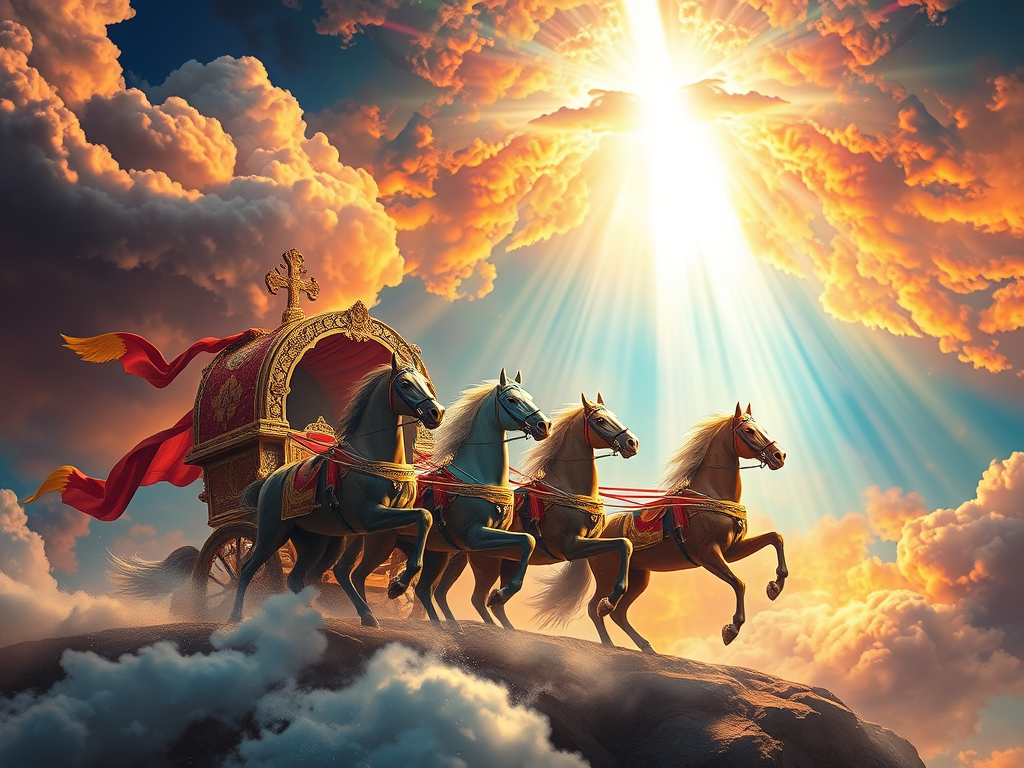
Riders of Judgment and Glory: The Four-Horse Chariots of Scripture and What They Reveal About Divine Power
From the thundering hooves of ancient war carts to the fiery steeds that cut through prophetic visions, the Bible uses horses as powerful symbols of movement, authority, and divine intervention. Nowhere is this imagery more vivid—or more mysterious—than in its depictions of four-horse chariots, supernatural vehicles that break into human history to reveal God’s hidden governance.
These moments are part earthly, part cosmic. Each one pulls back the veil and shows what it looks like when heaven touches earth.
Let’s explore the ancient symbolism of these heavenly chariots, why they appear, and what they reveal about divine power today.
1. When Heaven Touches Earth: Elijah and the Fiery Chariot
(2 Kings 2:11)
The story of Elijah’s departure is one of the Bible’s most dramatic scenes. The prophet isn’t carried away by angels or swept upward by clouds. Instead, a chariot of fire pulled by horses of fire appears and takes him into the heavens.
This is not a human weapon or vehicle—this is a divine chariot, blazing with otherworldly power.
What it symbolizes:
- Divine intervention breaking into human time
- God’s unstoppable force and authority
- A royal escort for a prophet who lived with courage and obedience
Elijah’s ascent offers our earliest glimpse that God’s realm has its own form of movement, far superior to anything earth could construct.
2. The Four Chariots: God’s Patrol of the Earth
(Zechariah 6:1–8)
This is Scripture’s central moment involving four horse-drawn chariots. Zechariah sees:
- Red horses
- Black horses
- White horses
- Dappled horses
Each group pulls its own chariot, rushing out from between two bronze mountains—symbols of God’s immovable authority.
Zechariah asks what the chariots represent. The angel answers:
“These are the four spirits of heaven, going out from where they stand before the Lord of all the earth.”
This vision reveals the inner workings of divine governance—ordered, purposeful, and global.
A. Divine Agents in Motion
The colors reflect different aspects of God’s activity:
- Red → conflict, upheaval, the shaking of nations
- Black → judgment, scarcity, divine restraint
- White → purity, victory, triumph
- Dappled → mixed outcomes, comprehensive justice
Each is a heavenly dispatch sent on mission.
B. Movement to All Directions
The chariots ride to the four corners of the earth—north, south, east, west.
This is not chaos. It is surveillance, order, and divine oversight across every nation.
C. Judgment and Renewal
In the ancient world, chariots were the pinnacle of military power. Zechariah’s vision flips the equation:
Earth’s mightiest forces are small shadows of heaven’s machinery.
The four chariots reveal a God who:
- Oversees empires
- Responds to injustice
- Directs history toward restoration
3. Chariots Throughout Scripture: Human Power vs. Divine Power
Elsewhere in the Bible, chariots serve as a contrast between human might and God’s supremacy.
- Pharaoh’s chariots collapse in Exodus 14—the sea obeys God, not kings.
- Psalm 20:7 declares:“Some trust in chariots and some in horses, but we trust in the name of the Lord.”
Weapons, armies, and political power all fade. Heaven’s chariots endure.
4. Why the White Horse Matters Most
Throughout Scripture, the white horse carries special significance.
In Revelation 19, Christ returns riding a white horse, symbolizing:
- Uncorrupted victory
- Divine kingship
- Perfect judgment
- The dismantling of injustice
This is not the crucified Christ of vulnerability.
This is the victorious Christ of glory.
The thread runs back to Zechariah:
- White horses → victory
- White chariot → God’s triumph sent into the world
- Christ on a white horse → triumph fully revealed
The symbolism completes itself.
5. What These Images Mean for Christians Today
The biblical chariots teach several enduring truths:
1. God sees the whole world—even when it feels chaotic.
The four chariots survey the earth. Nothing escapes divine sight.
2. God’s justice is ordered, not random.
Each horse has a mission.
History unfolds under divine wisdom, not human ambition.
3. Divine power surpasses every earthly power.
Empires rise and fall.
Heaven’s chariots remain.
4. God is active, not distant.
Whether in Elijah’s fiery escort or Zechariah’s global patrol, the message is consistent:
God intervenes in time, space, and history.
6. Conclusion: The Four Horses and the Future
The imagery of heavenly chariots is more than poetic flourish—it is prophetic insight. It shows us a universe under divine governance, a God who rides into history with intention, and a future where justice becomes visible.
The four-horse chariots hint at the final moment when Christ returns—not in humility, but in glory—riding the last and greatest white horse of Scripture.
Heaven is not still.
It moves.
And it moves with purpose.

From Sol Indiges to Sol Invictus: Sun Worship in Ancient Rome
Intro:
Long before Christianity became Rome’s official religion, the sun held a central place in Roman spirituality. From minor deities to state-sponsored cults, the sun god shaped political, religious, and cultural life, leaving traces that would echo into the Christian era.
Section 1: Early Sun Worship — Sol Indiges
In the early Roman Republic, Sol Indiges was revered as a minor agricultural deity, symbolizing the sun’s life-giving force.
Festivals such as the Agonalia and Dies Natalis Solis celebrated the sun’s role in nurturing crops and sustaining life. At this stage, sun worship existed primarily at a local and ritualistic level, influential but not dominant in Roman religion.
Section 2: The Rise of Sol Invictus
Between the 1st and 3rd centuries CE, Roman sun worship evolved, absorbing eastern influences from Syria and Persia.
Sol Invictus — “The Unconquered Sun” — emerged as a symbol of victory, imperial power, and cosmic order. Emperor Aurelian institutionalized this cult in 274 CE, constructing grand temples and establishing a festival on December 25, linking the sun’s rebirth with political authority.
Section 3: Constantine and the Sun
Before converting fully to Christianity, Constantine showed devotion to Sol Invictus, reflecting the sun’s continued cultural and religious significance.
Christian symbolism adopted elements of solar imagery — halos, radiant crowns, and even the choice of December 25for Christ’s birth — highlighting continuity and adaptation from pagan traditions. For decades, sun worship coexisted with Christianity before the eventual suppression of pagan rites.
Conclusion:
Sun worship in Rome was more than religious devotion; it was a political and cultural force. Its symbols and rituals influenced the nascent Christian tradition, illustrating how ancient beliefs can persist and transform across centuries.

🌱 Bees, Worms & the Secret Life Under Your Feet
Why the tiniest creatures keep your soil alive
Soil isn’t just dirt—it’s a living ecosystem. And two of the biggest contributors to its health are working in totally different worlds: one in the air, one underground.
🐝 Bees: Sky-Level Soil Builders
Bees don’t dig or burrow, but they shape soil health in powerful indirect ways:
- Pollination = plant reproduction. More seeds, more roots, more leaf litter.
- Plant diversity stabilizes soil. Different root systems prevent erosion and feed different microbes.
- More flowers = more carbon in the ground. Plants pull CO₂ from the air and store it in soil as organic matter.
- Bees thrive in aerobic ecosystems. Healthy air circulation, good moisture balance, and rich plant life all create conditions that support both bees and living soil.
Fun fact: When bees pollinate clover and alfalfa, they help nitrogen-fixing plants thrive—these plants literally add fertilizer to soil naturally.
🪱 Earthworms: The Underground Engineers
Earthworms directly transform the physical and chemical structure of soil:
- Aeration: Their tunnels bring oxygen deep underground.
- Water flow: Channels from worm movement let water drain instead of stagnating.
- Casting power: Worm castings contain 5x more nitrogen and 7x more phosphorus than surrounding soil.
- Microbe boosters: Castings contain beneficial bacteria that help nutrients become plant-available.
- Soil detox: Worms can help break down some pollutants and heavy metals.
Because worms breathe through their skin, they must live in oxygen-rich soil. Waterlogged soil = death for worms = collapse in soil structure.
Fun fact: In healthy soil, worms can move over 10 tons of soil per acre per year through their digestive systems.
🌬️ Aerobic vs. Anaerobic Soil — The Invisible Battle
Healthy soil is mostly aerobic, meaning:
- Oxygen is present
- Microbes can break down organic matter efficiently
- Soil smells earthy, not sour
- Roots grow deeper and stronger
- Nutrients cycle faster
Anaerobic soil (low oxygen) develops when:
- Soil stays soaked too long
- Clay is compacted
- No worms or root channels create air pathways
Anaerobic conditions create fermentation gases, root rot, and harmful microbes. But small anaerobic pockets are normal—they host specialized bacteria that help cycle nitrogen and sulfur.
The goal: 90–95% aerobic, 5–10% anaerobic microzones.
🌼 Why Supporting Bees + Worms Works So Well
Above and below ground, they reinforce each other:
- Bees → more flowers → more roots → more organic matter → worms feast
- Worms → better soil structure → healthier plants → more flowers → bees feast
- Together → increased carbon storage, healthier ecosystems, stronger crops
It’s a feedback loop of life.
🌎 Simple Things You Can Do
Let some areas stay wild: clover, dandelions, and leaf litter help both bees and worms.
Plant bee-friendly flowers (especially natives).
Avoid pesticides that harm pollinators and soil life.
Add compost to feed worms and microbes.
Reduce soil compaction—mulch, no-till, raised beds.
KRS-One:
From the Boogie Down Bronx to Minister of Hip Hop
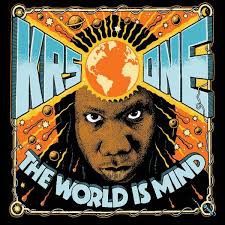
Few artists have shaped hip-hop culture as profoundly as KRS-One, also known as “The Teacha.” Born Lawrence Parker in 1965 in the Bronx, New York, his story is one of resilience, creativity, and an enduring commitment to education and spirituality through music. From his early days with Boogie Down Productions (BDP) to founding the Temple of Hip Hop, KRS-One has consistently challenged the limits of what it means to be an artist. His journey is not just about beats and rhymes—it’s about using hip-hop as a platform for teaching, philosophy, and ministry.
Growing up in the Bronx during the 1970s and 1980s, KRS-One experienced firsthand the harsh realities of urban life: poverty, violence, and systemic neglect. He found solace in creative expression, particularly in graffiti and music. His early involvement in hip-hop wasn’t merely entertainment—it was cultural resistance. In 1987, KRS-One and DJ Scott La Rock formed Boogie Down Productions and released the groundbreaking album Criminal Minded. The album fused hard-hitting beats with vivid storytelling, blending street narratives with complex lyricism and marking a new era for hip-hop.
Tragedy struck when Scott La Rock was murdered that same year, a pivotal moment that inspired KRS-One to shift toward socially conscious music. Follow-up albums like By All Means Necessary (1988) introduced themes of social justice, community responsibility, and addressing urban violence. Tracks such as “Stop the Violence” became anthems for change, demonstrating hip-hop’s potential as a medium for education and activism. KRS-One’s production style emphasized stripped-down beats and prominent sampling, allowing his lyrics—often rich with history, philosophy, and social critique—to take center stage.
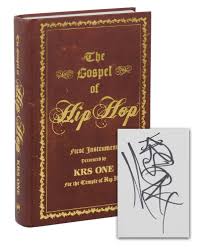
As his career progressed, KRS-One embraced the role of cultural philosopher. Nicknamed “The Teacha,” he used hip-hop to teach history, African culture, and self-knowledge. He lectured at universities, conducted workshops, and authored books such as Ruminations (2003) and The Gospel of Hip Hop (2009), codifying his philosophy that hip-hop is a sacred practice capable of fostering personal and collective transformation. In the mid-1990s, he founded the Temple of Hip Hop, framing the culture as spiritual practice with rituals, teachings, and a declaration of principles. His presentation of the “Hip Hop Declaration of Peace” at the United Nations in 2001 further positioned hip-hop as a global movement for dialogue, unity, and social change.
KRS-One’s dual focus on music production and ministry is particularly compelling. His minimalistic beats highlight lyrical content rich with philosophical and spiritual lessons. Albums like Return of the Boom Bap (1993) and I Got Next(1997) exemplify this approach, blending hard-hitting production with intellectual and ethical guidance. Collaborations with producers like DJ Premier further emphasize authenticity, cultural preservation, and the power of music as a teaching tool.
While some critics question framing hip-hop as a religion or his ministerial role as symbolic, they often overlook KRS-One’s transformative impact. By emphasizing knowledge, self-awareness, and social responsibility, he has helped legitimize hip-hop as an academic subject, a philosophical discourse, and a spiritual path. His influence extends far beyond music charts to classrooms, lecture halls, and community centers worldwide.
Ultimately, KRS-One’s life demonstrates that hip-hop can be more than entertainment—it can be education, ministry, and social activism. His journey illustrates the potential of art to inspire, teach, and lead, all while staying authentic and connected to the community that shaped him. From the streets of the Bronx to international stages, KRS-One remains a guiding figure, proving that hip-hop is not just a genre, but a way of understanding the world, expressing identity, and nurturing the spirit.
KRS-One’s legacy is a testament to artistry with conscience. As a producer, he creates music that resonates. As a minister, he cultivates wisdom that empowers. Together, these roles paint the portrait of an artist who is not only a pioneer of hip-hop but also a teacher, philosopher, and spiritual guide, showing that music at its best can educate, uplift, and transform entire cultures.

The Divine Beyond Gender: What the Bible Really Says and How Colonialism Changed the Story
For many people raised inside Christian or Western religious cultures, God arrives with an unexamined assumption: God is “He.” The Father. The King. The Lord. A cosmic male authority figure. But a closer look at the Bible—its original languages, its ancient cultural contexts, and the earliest Christian traditions—reveals a far more expansive and fluid vision of the divine. Long before colonizing powers imposed a rigidly patriarchal Christianity across the world, God in scripture was never confined to maleness. If anything, the biblical imagination insists that God transcends gender entirely.
The Biblical Imagination of God Is Bigger Than “He”
The opening chapter of Genesis sets the tone:
“God created humankind in God’s image… male and female God created them.”
The text does not say God is male. Instead, it presents humanity’s gender diversity as a reflection of divine wholeness. If all genders bear God’s image, then God must encompass and transcend all gender categories.
Throughout the Hebrew Bible, God is described through a sweeping range of metaphors—many of them explicitly feminine. In Isaiah, God cries out like a woman in labor, gasping with the intensity of creation. God consoles Israel like a mother comforting her child. In Deuteronomy, God hovers over the people like a mother eagle brooding over her young—a protective, powerful, deeply maternal image.
These aren’t poetic flourishes; they are theological declarations. Ancient writers used feminine metaphors because they saw divine action reflected in the women, midwives, and mothers of their community.
Even the biblical languages reinforce this.
- Ruach, “Spirit” in Hebrew, is grammatically feminine.
- Chokhmah in Hebrew and Sophia in Greek—“Wisdom”—are also feminine nouns.
Wisdom is not merely an attribute of God but a divine presence who “was with God in the beginning” (Proverbs 8). Early Jewish and Christian thinkers understood these as feminine dimensions of God’s activity—long before Western theology masculinized them.
Jesus continues this non-rigid approach. He compares himself to a mother hen gathering her chicks. The idea of being “born again” implies a divine womb. Jesus is not threatened by feminine imagery; he uses whatever expression best reveals the divine heart.
From the beginning, the biblical record is consistent: God is not male. God is beyond gender—containing, expressing, and transcending all energies and identities.
Early Christianity’s More Fluid Divine Language
The earliest Christian communities embraced this expansive vision. In Syriac Christianity—one of the oldest branches of the faith—the Holy Spirit was referred to explicitly as She. The Spirit was addressed as Mother, Womb, Comforter, and Midwife in hymns and liturgies. Some early baptisms invoked the Father, the Son, and the Mother-Spirit. This wasn’t fringe; it was normal.
Even the Trinity was not always rigidly masculine. Early Christian groups saw the Godhead as Father, Son, and Sophia(Wisdom). Others intertwined Spirit and Wisdom so closely that they considered them inseparable. These were mainstream theological conversations—not heresies.
In other words: the earliest Christians did not imagine a strictly male deity. That narrowing came later.
Where Colonialism Enters: The Masculinization of God
As Christianity evolved from a borderless spiritual movement into the religion of empire, the portrayal of God shifted under the influence of Greco-Roman patriarchy. Masculinity became the symbol of authority: God the Father ruled the cosmos, emperors ruled the empire, and men ruled households and churches. Feminine divine imagery—though still in scripture—was minimized or treated as metaphorical rather than central.
Then came colonialism.
As European empires spread Christianity across Africa, the Americas, Asia, and the Pacific, they exported not only their religion but an empire-shaped theology. Missionaries imposed a patriarchal, hierarchical Christian framework designed to reinforce colonial power. Cultures that honored goddesses, feminine divinities, ancestors, and nonbinary spiritual beings were labeled “pagan,” “dangerous,” or “irrational.”
Under colonial rule:
- Feminine divine imagery was suppressed.
- The Mary figure was emphasized as the only “acceptable” feminine sacred presence—revered but passive, holy but subordinate.
- The Holy Spirit’s feminine identity in early Christianity was erased under Latin and European traditions.
- Biblical translation choices leaned heavily toward male pronouns even when the original text did not.
The result was a God imagined almost exclusively as male—a theology perfectly tailored to support colonial domination. A male God justifies male ecclesial and political authority. A masculine deity reinforces patriarchal culture. And the divine becomes an instrument of empire.
But this is not the only Christian story. It is a distortion of a much older and wider sacred imagination.
Reclaiming the Beyond-Gender God Already in Scripture
To move beyond colonial theology is not to rewrite Christianity—it is to return to its original breadth.
Scripture itself invites a relationship with a divine presence who cannot be contained by human language:
God is mother and father, wind and fire, womb and warrior, voice and silence, eagle and midwife, breath and word.
God births, shelters, feeds, gathers, consoles, and creates.
God is neither male nor female—and is fully both, and more.
Reclaiming feminine and nonbinary divine imagery is not a modern invention. It is an act of remembering—a recovery of the ancient, expansive wisdom that colonialism sought to flatten. It restores the spiritual balance that empire disrupted and reopens the possibility of an inclusive sacred reality.
When God is seen beyond gender, the divine image becomes visible everywhere—in every body, every gender, every soul. The One who is beyond all categories becomes accessible to all people.
And that is the God the Bible has been describing all along.
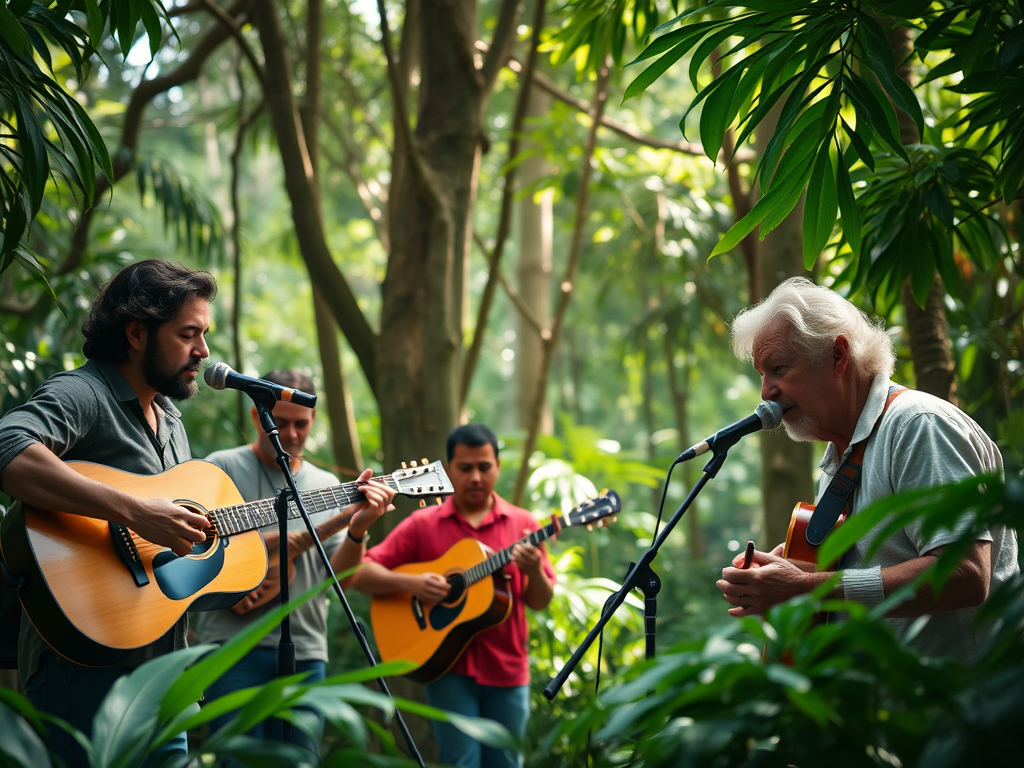
Sting: The Musician Who Made Environmental Activism His Stage
When most people think of Sting, images of legendary performances and timeless hits like Every Breath You Take come to mind. Yet behind the music lies a second, equally remarkable legacy: global environmental activism. For over three decades, Sting has leveraged his fame, influence, and creativity to protect rainforests, empower Indigenous communities, and inspire a generation of socially conscious artists.
From Music to Meaningful Action
Sting’s journey began in the vibrant 1980s music scene, first with The Police and later as a solo artist. Even early on, his songs carried socially conscious messages, reflecting themes of justice, responsibility, and environmental awareness. This foundation set the stage for a defining moment: meeting Chief Raoni Metuktire of the Kayapo people in Brazil. Witnessing firsthand the threats facing the Amazon, Sting and his wife, Trudie Styler, co-founded the Rainforest Foundation International in 1988. The organization’s mission was bold and clear: secure Indigenous land rights and protect the rainforest from deforestation.
Turning Influence into Action
Sting didn’t stop at founding a charity. He integrated music with activism, organizing benefit concerts at Carnegie Hall, collaborating with major artists, and raising millions of dollars for the cause. Events such as the 30th Anniversary Rainforest Fund concert and the SOS Rainforest Live fundraiser during the pandemic exemplify his ability to blend performance with purpose. Beyond the stage, he has used his platform to advocate for global environmental policies, attending forums like the UN Climate Change Conference and emphasizing the importance of Indigenous land stewardship.
Leadership in Action
Sting’s approach reflects principles highlighted by leadership experts like John Maxwell. His influence stems not from formal authority but from trust, integrity, and sustained action. He focuses on causes that matter, demonstrates discipline in long-term activism, and achieves tangible change by empowering others—particularly Indigenous leaders who are central to rainforest preservation. In doing so, Sting operates at the upper levels of Maxwell’s leadership model, mentoring and enabling others while building a lasting legacy.
Robert Greene’s 48 Laws of Power also provides insight into Sting’s strategy: he acts boldly, centers others in his campaigns, and earns respect through results rather than arguments. His activism is both visible and strategic, reflecting careful timing, consistency, and an understanding of how to transform influence into measurable impact.
Maintaining Relevance
Even today, Sting continues to make waves in both music and activism. His STING 3.0 tour draws crowds worldwide, while projects like his Tuscan estate, Il Palagio, highlight his commitment to sustainable practices. Music fuels his influence, and activism gives his art depth—each amplifying the other. By combining creativity with purpose, Sting demonstrates that a musician can also be a global leader, bridging culture, social responsibility, and environmental stewardship.
A Legacy of Purpose
Sting’s story is a testament to the power of combining passion with action. From stage to summit, from song to social change, he has shown that celebrity influence can extend far beyond entertainment—it can drive lasting environmental and cultural impact. For artists, activists, and fans alike, his life underscores a vital truth: the most enduring legacy is not just the music you create but the world you help protect.

The Brand Gap in Action: The Jim Henson Company
Branding isn’t just what a company says about itself—it’s what people feel about it. Marty Neumeier, in The Brand Gap(2006), emphasizes that a strong brand bridges the gap between strategy and creativity. Few companies exemplify this principle better than The Jim Henson Company, a studio built on imagination, innovation, and storytelling that transcends generations.
Answering the Three Little Questions
1. Who are you?
The Jim Henson Company is a pioneer of imaginative storytelling and creative innovation. From The Muppets to Fraggle Rock and The Dark Crystal, the company brings fantastical characters and immersive worlds to life, blending puppetry, animation, and cutting-edge technology.
2. What do you do?
Henson creates experiences that delight and inspire audiences of all ages. Through films, TV shows, live performances, and digital media, the company crafts stories that are visually inventive, emotionally resonant, and often layered with humor, heart, and social meaning.
3. Why does it matter?
The Jim Henson Company matters because it demonstrates the power of imagination to educate, entertain, and connect. Its creations spark creativity in audiences, encourage empathy through character-driven storytelling, and continue Jim Henson’s legacy of innovation in the arts. In a media landscape dominated by CGI and formulaic content, Henson remains a benchmark for originality and heart.
Differentiation: Innovation Meets Imagination
Differentiation is central to building a strong brand. The Jim Henson Company stands apart through its unique combination of artistry, puppetry, and technological experimentation. Unlike traditional animation or purely digital studios, Henson blends handcrafted performance with visual effects to create worlds that feel alive and magical. This commitment to creativity ensures the brand is immediately recognizable and emotionally resonant.
Collaboration: The Power of Creative Teams
No Henson production exists in isolation. The company thrives on collaboration—puppeteers, writers, designers, directors, and technical artists all contribute to a unified vision. This culture of teamwork ensures that every project, from TV specials to feature films, reflects the brand’s commitment to imagination and quality. Audiences experience the cohesion and care in every character, scene, and story.
Brand Story in Action
One vivid example of Henson’s brand story is The Fantastic Story video, which celebrates the company’s creative journey and legacy. The video traces Jim Henson’s rise from early puppet shows to iconic franchises like The Muppets and Fraggle Rock, highlighting how the company innovated in puppetry, animatronics, and digital effects. This narrative frames Henson not merely as an entertainment studio but as a laboratory for imagination and creativity.
By linking history, technical mastery, and creative vision, Henson positions itself as a brand that celebrates artistry, collaboration, and the magic of imagination. Audiences are reminded that the company has always pushed boundaries while staying true to its mission: to entertain, inspire, and connect people through storytelling.
Conclusion
The Jim Henson Company demonstrates the power of branding done right. By answering the Three Little Questions, maintaining differentiation through innovation, and fostering collaboration, Henson has built a brand that resonates across generations. Its stories and characters do more than entertain—they spark curiosity, inspire creativity, and remind audiences of the limitless possibilities of imagination. In bridging strategy and creativity, Henson proves that the best brands leave a lasting emotional impression while staying true to their essence.

The Resonant Blueprint: How Harmonics Shape Architecture and Space
Across history, musicians and architects have pursued the same mysterious ideal: harmony. A perfectly tuned chord can stir the soul, while a beautifully proportioned building can quiet the mind. Though one unfolds in time and the other in space, both rely on invisible principles of proportion, resonance, and mathematical relationship. When a string is struck on an instrument, it vibrates not only at a single frequency but also in a series of overtones that follow precise numerical ratios such as 2:1 for the octave and 3:2 for the fifth. These relationships were explored by Pythagoras, who discovered that simple ratios create the intervals we perceive as harmonious. This insight extended beyond music into philosophy and architecture, shaping the belief that number governs both sound and the structure of the cosmos.
The idea that architecture expresses harmony in physical form has long inspired thinkers and designers. Johann Wolfgang von Goethe famously described architecture as “frozen music,” suggesting that buildings embody rhythm and proportion just as compositions do. Classical structures such as the Parthenon in Athens reflect proportional relationships close to harmonic ratios like 3:2 and 2:1, reinforcing the belief that human-made forms could align with cosmic order. In sacred spaces such as Chartres Cathedral, soaring vaults shape and amplify chant, creating a powerful dialogue between voice and stone. In the modern era, composer and architect Iannis Xenakis carried this tradition forward by designing the Philips Pavilion using mathematical principles drawn from musical composition, transforming sound into spatial form.
Harmonic thinking extends beyond acoustics and classical proportion into broader ideas about motion, ecology, and wellbeing. In physics, harmonic motion describes the natural oscillations that appear throughout the universe, from pendulums to planetary orbits. In contemporary architecture, biophilic design applies similar principles by incorporating natural light, organic patterns, and proportional balance to create environments that feel restorative and alive. Whether through ancient temples aligned with celestial paths or modern buildings shaped by digital acoustic modeling, the goal remains consistent: to create spaces that resonate physically and emotionally. Ultimately, harmony connects sound, structure, and human perception, reminding us that beauty often arises from relationships that mirror the deeper patterns of life itself.
 Welcome
Leave a comment